E-book · Subperiosteal Implants · Dr. Antoine Diss  |  Lifetime access e-book  ·  Instant access upon purchase
100+ pages handbook  ·  Lifetime Access e-book

Redefining Complex Rehabilitation with the Intraosseous Subperiosteal Implants Protocol.

Discover the Intraosseous Subperiosteal Implants framework — a fully digital, single-stage approach that delivers definitive results for patients with extreme bone loss.
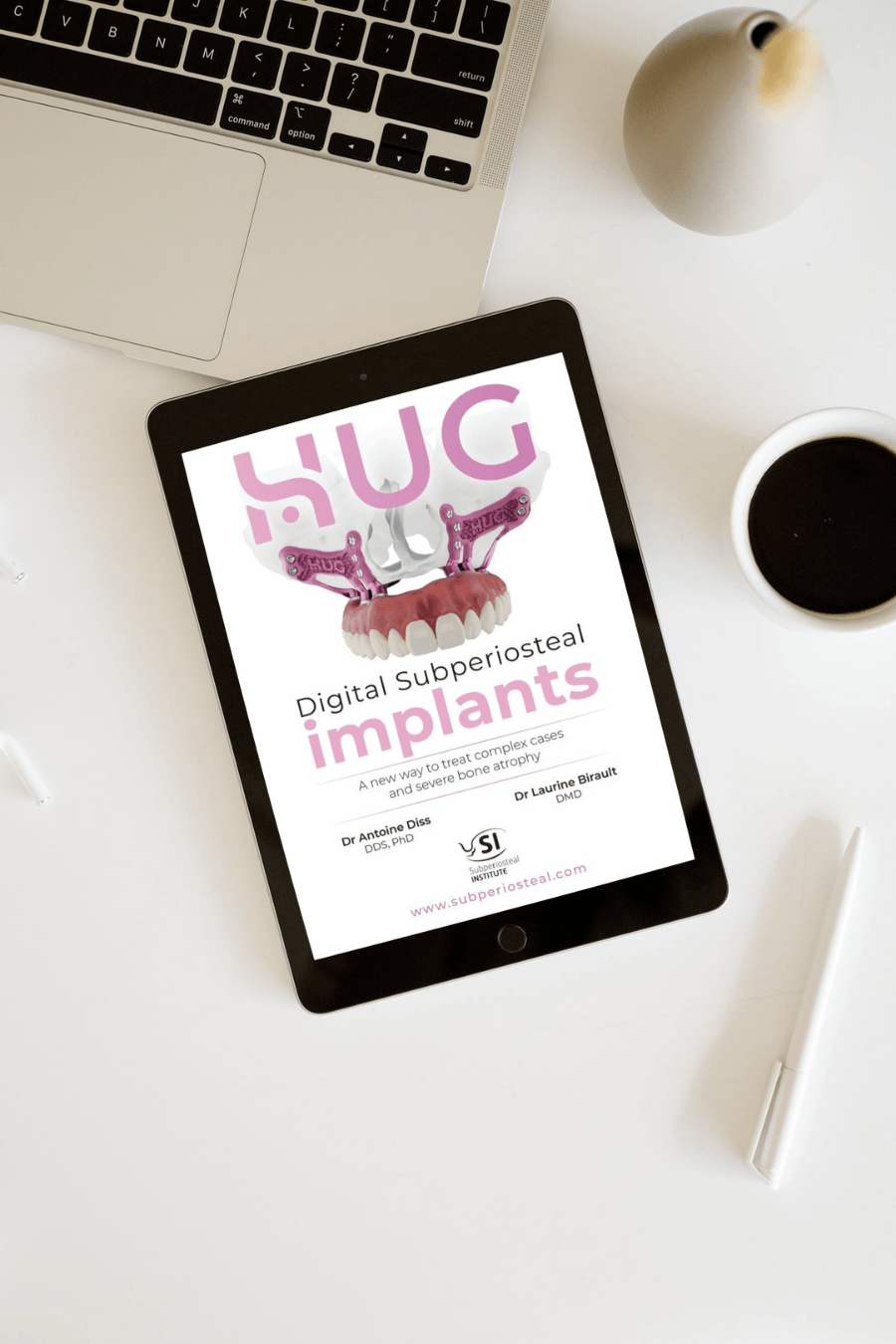
e-book Visual
Get My E-Book !
Secure payment · Instant access · No subscription
🔥 What You’ll Discover In This Handbook🔥

The Digital Subperiosteal Implants Success

Discover how modern digital workflows, CAD/CAM precision, and Grade 23 titanium transformed outdated methods into a predictable, reliable solution for severe bone atrophy.

The 9 Pillars Framework Explanation

Master our evidence-based system controlling all biological, mechanical, and surgical variables. Each pillar ensures complication prevention, predictable outcomes, and optimal prosthetic integration.

Subperiosteal Implants vs. Zygomatic

A critical, evidence-based literature review comparing survival rates and clinical outcomes. Understand exactly why digital lattice structures surclass traumatic zygomatic alternatives in extreme maxillary atrophies.

When Is a Subperiosteal Implant the Right Choice?

Learn to identify ideal candidates. See when severe atrophy renders conventional grafting undesirable, making patient-specific implants the simplest, most predictable alternative for success.

How to Design a Patient-Specific Implant Correctly

Explore vital design principles dictating implant stability, force distribution, and tissue health. Learn how precise, strategic choices differentiate long-term success from failure.

Why Bone Cutting Guides and Pterygoid Anchorage Matter

Understand why guided bone reduction and pterygoid anchorage are essential. They guarantee precise seating, enhance cortical fixation, and create a highly favorable biomechanical environment.

The Science Behind Osseointegration

See how Grade 23 ELI titanium and gyroid lattice architecture promote rapid bone ingrowth. Today’s implants organically integrate with the patient’s anatomy.

Soft Tissue Management: The Forgotten Key

Master flap design, tissue thickness management, and tension-free closure. Proper soft tissue protocols are crucial to preventing recession, exposure, and long-term aesthetic compromise.

How to Avoid the Costly Mistakes

Most complications are preventable. Learn to anticipate and avoid common design errors, fixation mistakes, and biomechanical failures to ensure predictable, long-term clinical success.

Evidence, Clinical Results, and Future Perspectives

Explore the scientific foundations through peer-reviewed studies and clinical outcomes. Separate modern facts from outdated myths in this rapidly evolving field of implantology.

Turn Expertise into a New Treatment Line

Master a fast-growing solution for severe atrophy. Differentiate your practice by confidently treating patients previously considered untreatable with a highly specialized, rewarding service.

Four representative clinical cases presentation

Review several detailed clinical cases from start to finish. Discover practical applications of these concepts, demonstrating real-world challenges, surgical execution, and successful final outcomes.

⏬Your Next Step Starts Here ⏬

  • Afghanistan+93
  • Afrique du Sud+27
  • Albanie+355
  • Algérie+213
  • Allemagne+49
  • Andorre+376
  • Angola+244
  • Antigua-et-Barbuda+1268
  • Arabie saoudite+966
  • Argentine+54
  • Arménie+374
  • Aruba+297
  • Australie+61
  • Autriche+43
  • Azerbaïdjan+994
  • Bahamas+1242
  • Bahreïn+973
  • Bangladesh+880
  • Barbade+1246
  • Belgique+32
  • Belize+501
  • Bénin+229
  • Bhoutan+975
  • Biélorussie+375
  • Bolivie+591
  • Bosnie-Herzégovine+387
  • Botswana+267
  • Brésil+55
  • Brunei+673
  • Bulgarie+359
  • Burkina Faso+226
  • Burundi+257
  • Cambodge+855
  • Cameroun+237
  • Canada+1
  • Cap-Vert+238
  • Chili+56
  • Chine+86
  • Chypre+357
  • Colombie+57
  • Comores+269
  • Congo-Brazzaville+242
  • Congo-Kinshasa+243
  • Corée du Nord+850
  • Corée du Sud+82
  • Costa Rica+506
  • Côte d’Ivoire+225
  • Croatie+385
  • Cuba+53
  • Curaçao+599
  • Danemark+45
  • Djibouti+253
  • Dominique+1767
  • Égypte+20
  • Émirats arabes unis+971
  • Équateur+593
  • Érythrée+291
  • Espagne+34
  • Estonie+372
  • Eswatini+268
  • État de la Cité du Vatican+39
  • États-Unis+1
  • Éthiopie+251
  • Fidji+679
  • Finlande+358
  • France+33
  • Gabon+241
  • Gambie+220
  • Géorgie+995
  • Ghana+233
  • Gibraltar+350
  • Grèce+30
  • Grenade+1473
  • Guadeloupe+590
  • Guam+1671
  • Guatemala+502
  • Guinée+224
  • Guinée équatoriale+240
  • Guinée-Bissau+245
  • Guyana+592
  • Guyane française+594
  • Haïti+509
  • Honduras+504
  • Hongrie+36
  • Îles Féroé+298
  • Îles Marshall+692
  • Îles Salomon+677
  • Inde+91
  • Indonésie+62
  • Irak+964
  • Iran+98
  • Irlande+353
  • Islande+354
  • Israël+972
  • Italie+39
  • Jamaïque+1876
  • Japon+81
  • Jordanie+962
  • Kazakhstan+7
  • Kenya+254
  • Kirghizstan+996
  • Kiribati+686
  • Kosovo+383
  • Koweït+965
  • La Réunion+262
  • Laos+856
  • Lesotho+266
  • Lettonie+371
  • Liban+961
  • Liberia+231
  • Libye+218
  • Liechtenstein+423
  • Lituanie+370
  • Luxembourg+352
  • Macédoine du Nord+389
  • Madagascar+261
  • Malaisie+60
  • Malawi+265
  • Maldives+960
  • Mali+223
  • Malte+356
  • Maroc+212
  • Martinique+596
  • Maurice+230
  • Mauritanie+222
  • Mexique+52
  • Micronésie+691
  • Moldavie+373
  • Monaco+377
  • Mongolie+976
  • Monténégro+382
  • Mozambique+258
  • Myanmar (Birmanie)+95
  • Namibie+264
  • Nauru+674
  • Népal+977
  • Nicaragua+505
  • Niger+227
  • Nigeria+234
  • Norvège+47
  • Nouvelle-Calédonie+687
  • Nouvelle-Zélande+64
  • Oman+968
  • Ouganda+256
  • Ouzbékistan+998
  • Pakistan+92
  • Palaos+680
  • Panama+507
  • Papouasie-Nouvelle-Guinée+675
  • Paraguay+595
  • Pays-Bas+31
  • Pays-Bas caribéens+599
  • Pérou+51
  • Philippines+63
  • Pologne+48
  • Polynésie française+689
  • Porto Rico+1
  • Portugal+351
  • Qatar+974
  • R.A.S. chinoise de Hong Kong+852
  • R.A.S. chinoise de Macao+853
  • République centrafricaine+236
  • République dominicaine+1
  • Roumanie+40
  • Royaume-Uni+44
  • Russie+7
  • Rwanda+250
  • Saint-Christophe-et-Niévès+1869
  • Saint-Marin+378
  • Saint-Pierre-et-Miquelon+508
  • Saint-Vincent-et-les Grenadines+1784
  • Sainte-Lucie+1758
  • Salvador+503
  • Samoa+685
  • Sao Tomé-et-Principe+239
  • Sénégal+221
  • Serbie+381
  • Seychelles+248
  • Sierra Leone+232
  • Singapour+65
  • Slovaquie+421
  • Slovénie+386
  • Somalie+252
  • Soudan+249
  • Soudan du Sud+211
  • Sri Lanka+94
  • Suède+46
  • Suisse+41
  • Suriname+597
  • Syrie+963
  • Tadjikistan+992
  • Taïwan+886
  • Tanzanie+255
  • Tchad+235
  • Tchéquie+420
  • Territoire britannique de l’océan Indien+246
  • Territoires palestiniens+970
  • Thaïlande+66
  • Timor oriental+670
  • Togo+228
  • Tonga+676
  • Trinité-et-Tobago+1868
  • Tunisie+216
  • Turkménistan+993
  • Turquie+90
  • Tuvalu+688
  • Ukraine+380
  • Uruguay+598
  • Vanuatu+678
  • Venezuela+58
  • Viêt Nam+84
  • Yémen+967
  • Zambie+260
  • Zimbabwe+263
Dr. Antoine Diss
Co-Designer of Intraosseous
Subperiosteal Implants

Dr. Antoine Diss

Ph.D. in Science  |  DDS  |  Co-Designer of HUG®

Dr. Antoine Diss is a leading expert in complex bone atrophy rehabilitation and the co-designer of the Intraosseus Subperiosteal Implant. He has pioneered a fully digital approach to treating patients where conventional implants are not an option — combining CBCT imaging, CAD design, and patient-specific manufacturing to deliver definitive prostheses in a single surgical stage.

As founder of the Subperiosteal Institute in Nice, France, Dr. Diss has trained over 150 dental surgeons internationally and published peer-reviewed research in Cureus on pterygoid anchorage and subperiosteal implant outcomes.

Doctor of Dental Surgery (DDS) — University of Nice
PhD in Science — University of Nice Sophia Antipolis
International Lecturer & Published Researcher
Co-Designer of the HUG® Subperiosteal Implant
Founder of Subperiosteal Institute — Nice, France

What Dental Professionals Say About Subperiosteal Institute

Trustpilot Review
★★★★★

"A practical and effective training course covering an innovative technique, all in a very friendly atmosphere. Thank you, Laurine and Antoine."

Dr. L. Antoine
Dental Surgeon — France
★★★★★

"A highly successful training course, organised with great attention to detail. The trainers are approachable and always willing to help. Mistakes are highlighted and discussed openly. Overall, we were very satisfied. Thank you."

Dr. J. Vermeulen
Dental Surgeon — France
★★★★★

"Very interesting new concepts. Highly recommended."

Dr. Alvaro C. Reuter Mullor
Dentistry — Spain
★★★★★

"Laurine and Antoine have worked very hard to enable us to implement this technique and provide reliable care for many patients. The e-learning module was extremely helpful in the run-up to the training day, and we are now ready to start treating our first cases at the HUG. Thank you to them, and see you soon to discuss the cases!"

Dr. B. Camilleri
Dental Surgeon — France
★★★★★

"Excellent training for Subperiosteal Implants. Loved every bit of training! Looking forward to offer great care and improved services to my patients. Thanks to Dr.Antoine Diss and Sara for fantastic day at the institute. All the very best !!"

Dr. P. Kadam
Implantology Dentistry — Uk
★★★★★

"An excellent course led by two highly skilled and knowledgeable practitioners! Both successes and setbacks are discussed, which helps us improve our practice. The course is well organised, and the practical sessions are very rewarding."

Dr. A. Derache
Maxillofacial Surgeon — France

Any Questions?

Who is this book written for?
This book is written exclusively for licensed dental surgeons, oral surgeons, and maxillofacial surgeons who encounter patients with severe bone atrophy and wish to deepen their understanding of subperiosteal implantology. It assumes a foundational knowledge of implantology and is designed for clinicians seeking both scientific grounding and practical clinical guidance.
How do I access the book after purchase?
Immediately after your payment is confirmed, you will receive an email with your download link. The book is available in digital format and can be read on any device — computer, tablet, or smartphone — at any time, with no expiry date on your access.
What exactly does the book cover?
The book builds a complete clinical system around the nine-pillar HUG® framework — from the biological rationale for using Grade 23 ELI titanium and gyroid lattice architecture, to the surgical protocols that explain why one published series achieved zero recession while another reported 65%. Each pillar targets a specific failure mode: implant design, surface anodization, patient-specific finite element validation, pterygoid anchorage, bone cutting guide, tissue regeneration with xenograft and NovoMatrix, surgical rehearsal with PMMA replicas, prosthetic design, and the full digital workflow from CBCT to same-day definitive bridge delivery.

It also includes a dedicated chapter on implant anatomy and technical specifications for both maxillary and mandibular configurations, and closes with an honest assessment of the current evidence — including its limits. The central message is clear: without a conceptual framework, expect a 30% soft tissue recession rate. With full adherence to the nine pillars, published results show zero implant loss, zero soft tissue exposure, and zero infection at 22 months.

Is the content evidence-based?
Yes. Every chapter is grounded in peer-reviewed literature, including Dr Diss's own clinical publications. The book references systematic reviews, multicentre cohort studies, and histological data to support each clinical recommendation — ensuring that every decision described is backed by the current scientific consensus.
Can I complement this book with hands-on training?
Absolutely. The Subperiosteal Institute regularly organises hands-on training sessions in Nice (France), or in Paris (France). This book serves as a theoretical foundation before attending a practical course. Visit subperiosteal.com for upcoming dates.
What language is the book written in?
The book is written entirely in English, as part of the Subperiosteal Institute's 100% English-speaking program — designed to serve the international dental community and make the Intraosseus Subperiosteal Implant concept accessible to clinicians worldwide.